ACRO has built automation systems for 90 years. It took two clicks and a scroll to find that out.
ACRO's 29-page site made buyers work for the basics. A procurement manager landing on it couldn't confirm ACRO served their industry without clicking into a landing page and scrolling to find the right item. Analytics showed most left before they got there.
29 pages, and the ones buyers wanted were the hardest to reach.
ACRO competes on track record, which is the one thing a bigger competitor can't buy. The site didn't lead with it. A procurement manager weighing three suppliers at once had no fast way to confirm ACRO even worked in their industry, and the analytics showed most of them leaving rather than digging for it.
Competitors ran sites of 17 and 21 pages. ACRO had 29. The brief called it a UI refresh, but the stated goals, fewer steps to content and solutions front and center, were both structural. The work started with the page structure, not the visual design.
A UI refresh following new brand guidelines. Stated goals: fewer steps to content, solutions as the main focus.
Pages nested inside pages. The content buyers came for sat deepest.
The build had to live in WordPress and be manageable by ACRO's in-house SEO team after launch. No budget for new copy, so the redesign had to work with existing content.
- Index
- About Us
- About Us
- Management
- Industries We Serve
- Automotive
- Electric Vehicles
- Energy Storage
- Appliances
- Consumer Products
- Other Markets
- Services Overview
- Customer Service
- Design Process
- Quality Assurance
- Retool
- Services We Offer
- Solutions Overview
- Automated Assembly
- Automated Welding
- Dispensing Systems
- Robotics
- System Integration
- Tool Polishing
- Spare & Replacement Parts
- Media Center
- Case Studies
- Media Center
- Video Gallery
- Contact Us
- Careers
A procurement manager landing on the homepage had no way to confirm ACRO served their industry. Reaching a solution meant a click into a landing page, a scroll to find the right item, then another click. No dropdown, no shortcuts. Analytics showed most left instead.
- Index · solutions at scroll one
- Markets
- Solutions ↓
- Automated Assembly
- Automated Welding
- Dispensing Systems
- Robotics
- System Integration
- Tool Polishing
- Services
- Support
- About Us
- Resources ↓
- Video Gallery
- Case Studies
- Careers
- Contact Us
Solutions are reachable two ways without a single click: browsable on the homepage at first scroll, or visible immediately in the nav dropdown. The intermediate landing page is gone. A buyer can confirm ACRO works in their space before clicking anything.
Analytics showed where customers were already going. I stopped making them work to get there.
Google Analytics showed ACRO's solutions pages were the most visited content on the site. Automated Welding, Robotics, and Automated Assembly all sat in the top five. Customers were seeking them out despite the friction, reading them, and then hitting a dead end: none of those pages had a call to action. I pulled solutions directly onto the homepage as the first scroll after the hero, fully clickable and organized by industry.
It was a deliberate structural break from how the old site was organized, and leadership pushed back initially. I brought the analytics into the room and walked through exactly where customers were going and how many steps stood between them and that content. The data resolved it.
I ran the layouts past engineers and sales staff at ACRO, the people fielding buyer questions every day. Same question each time: if you landed here trying to find out whether ACRO can build what you need, does this page get you there?
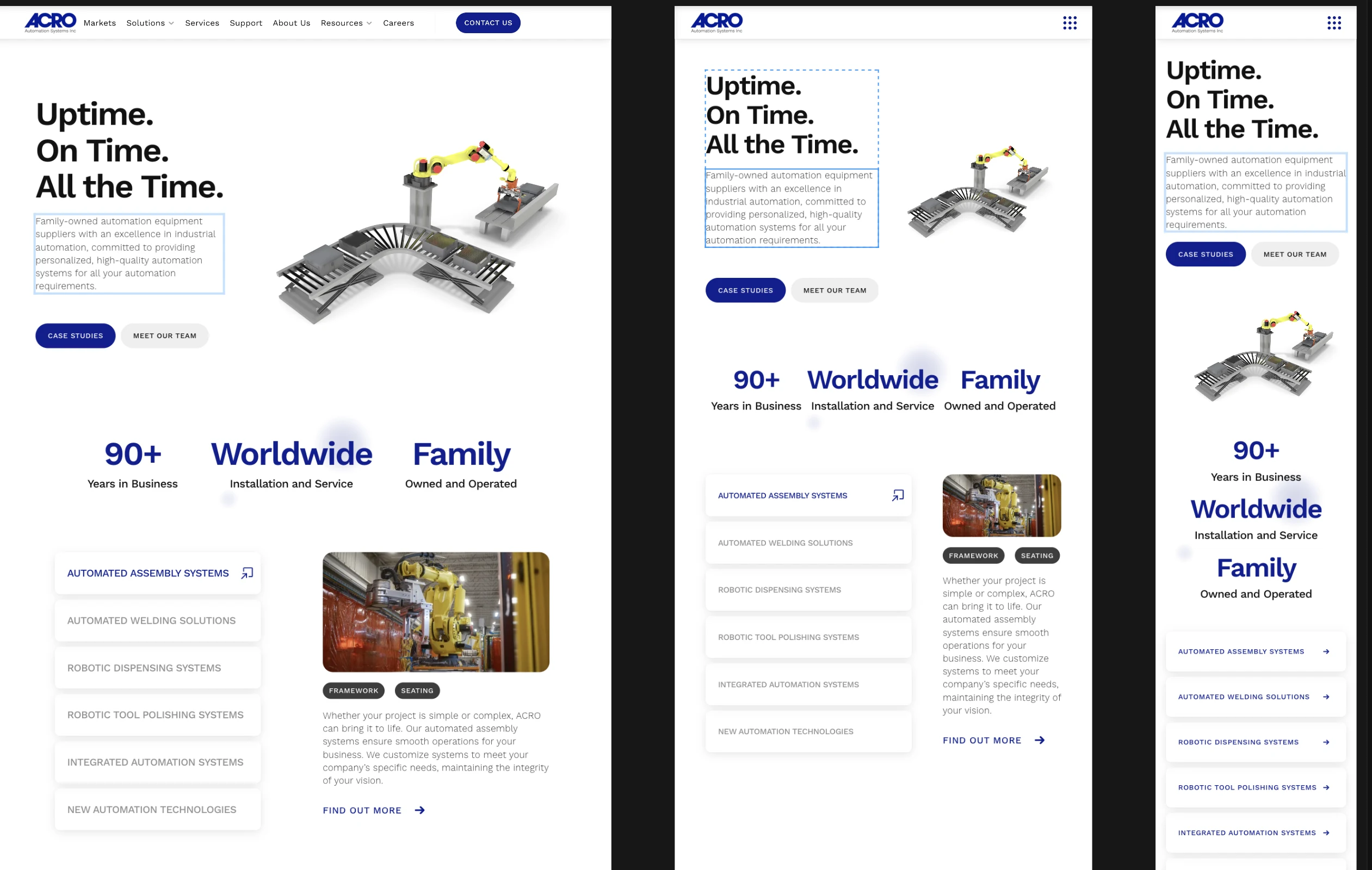
Solutions are organized by industry rather than product category, because that's how buyers ask. Not "I need automated assembly" but "I'm in automotive, does ACRO work in my space?" The industry labels answer that before anyone has to ask.
Pages artificially split across multiple destinations were merged into single scrollable layouts. The content didn't shrink. The distance to it did.
The first view where a buyer sees industry fit, what ACRO builds, and how to get in touch. No scroll required.
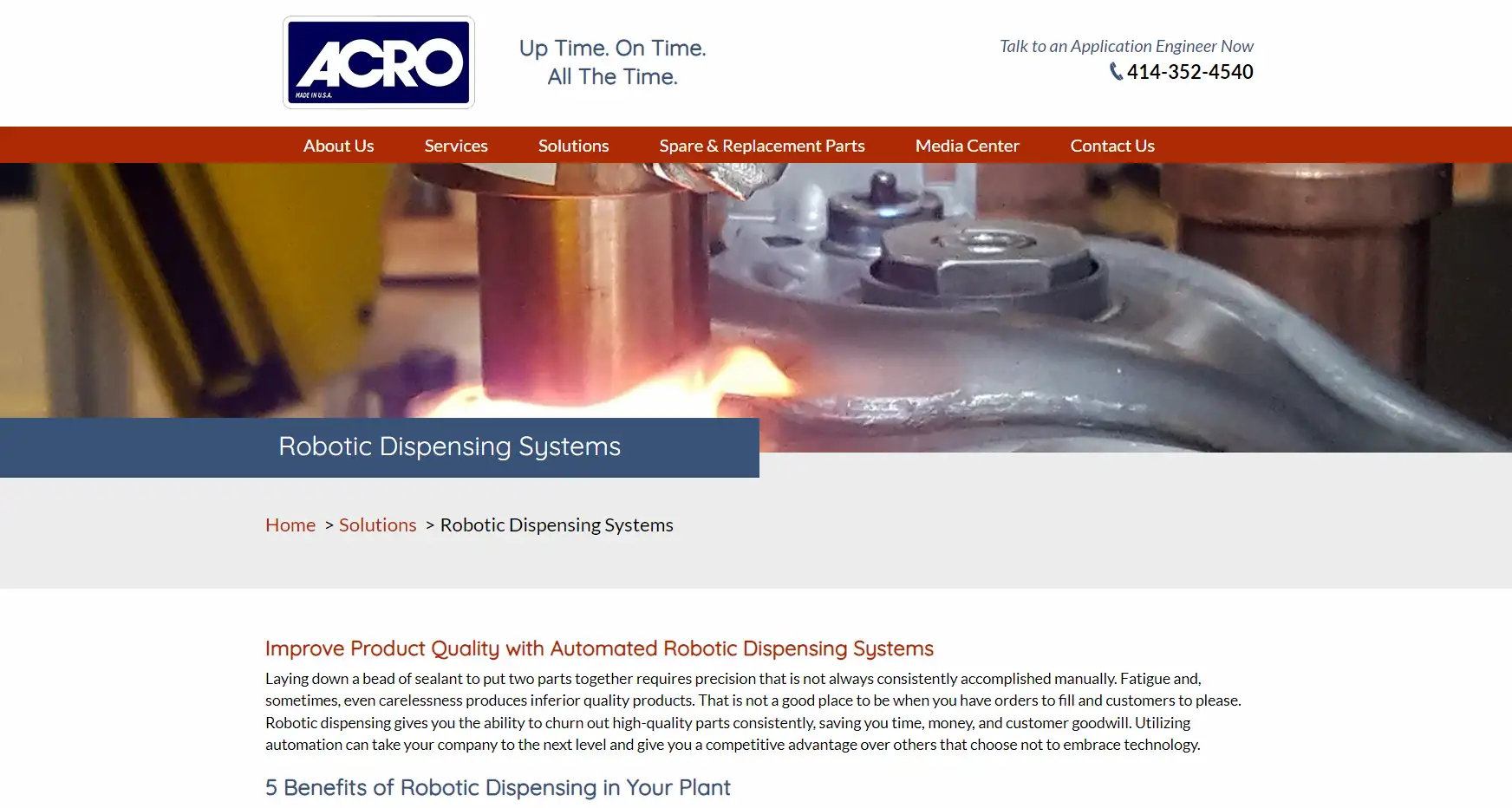
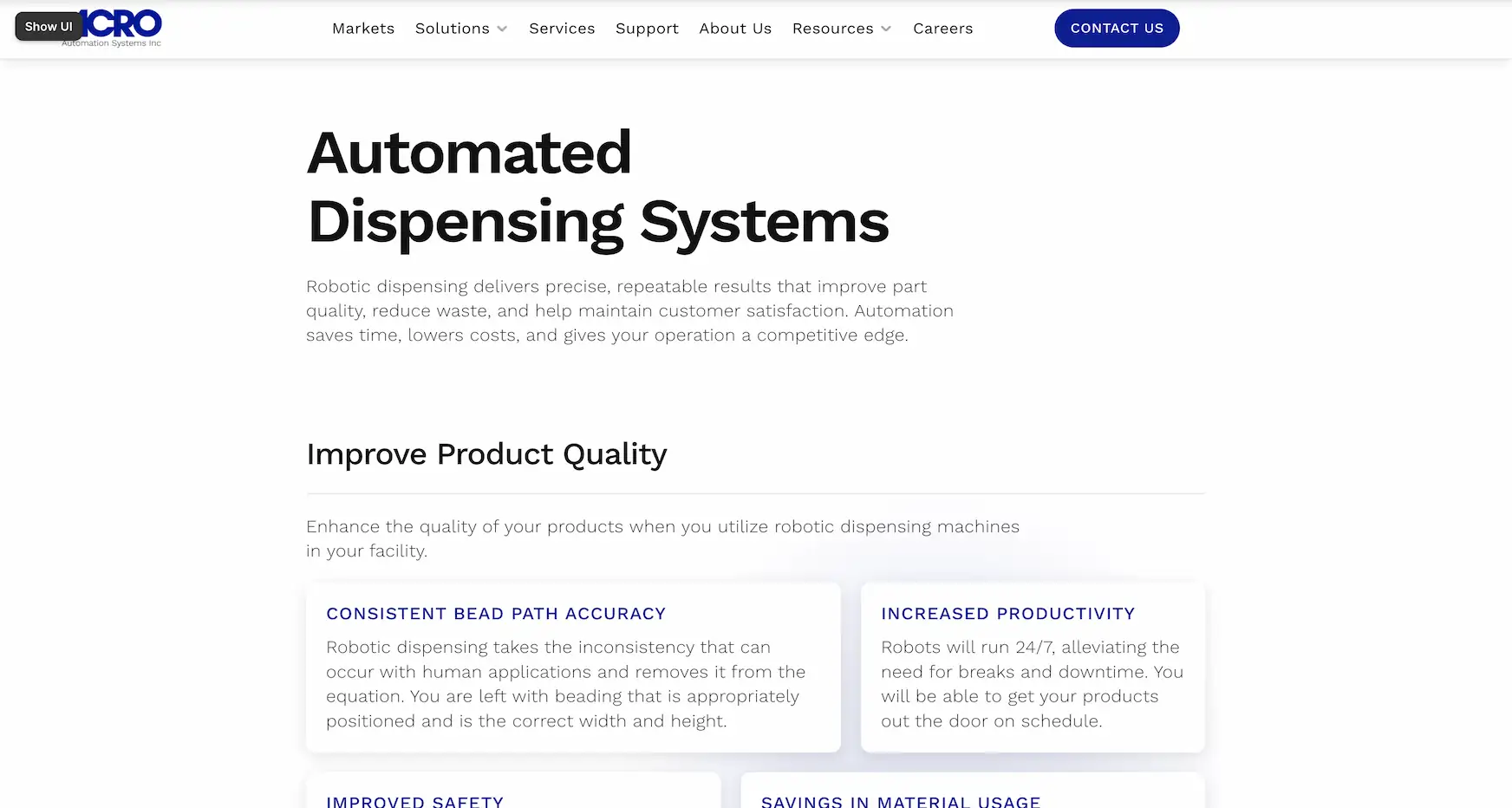
Measured against the pre-launch baseline. Visitors stayed longer, which is what you'd expect once the content they came for is the first thing they hit.
Sales confirmed quality improved alongside volume. Prospects were referencing specific solution pages in their first emails.
I'd push harder on content strategy earlier. The structural decisions were sound, but several solution pages launched with copy held over from the old site. The refresh fixed the UX; the content problem is ongoing, and I should have scoped it explicitly rather than treating it as a background task.